Shorthand vs Typing: Understanding the Two Core Skills of Stenography
Two Skills, One Job
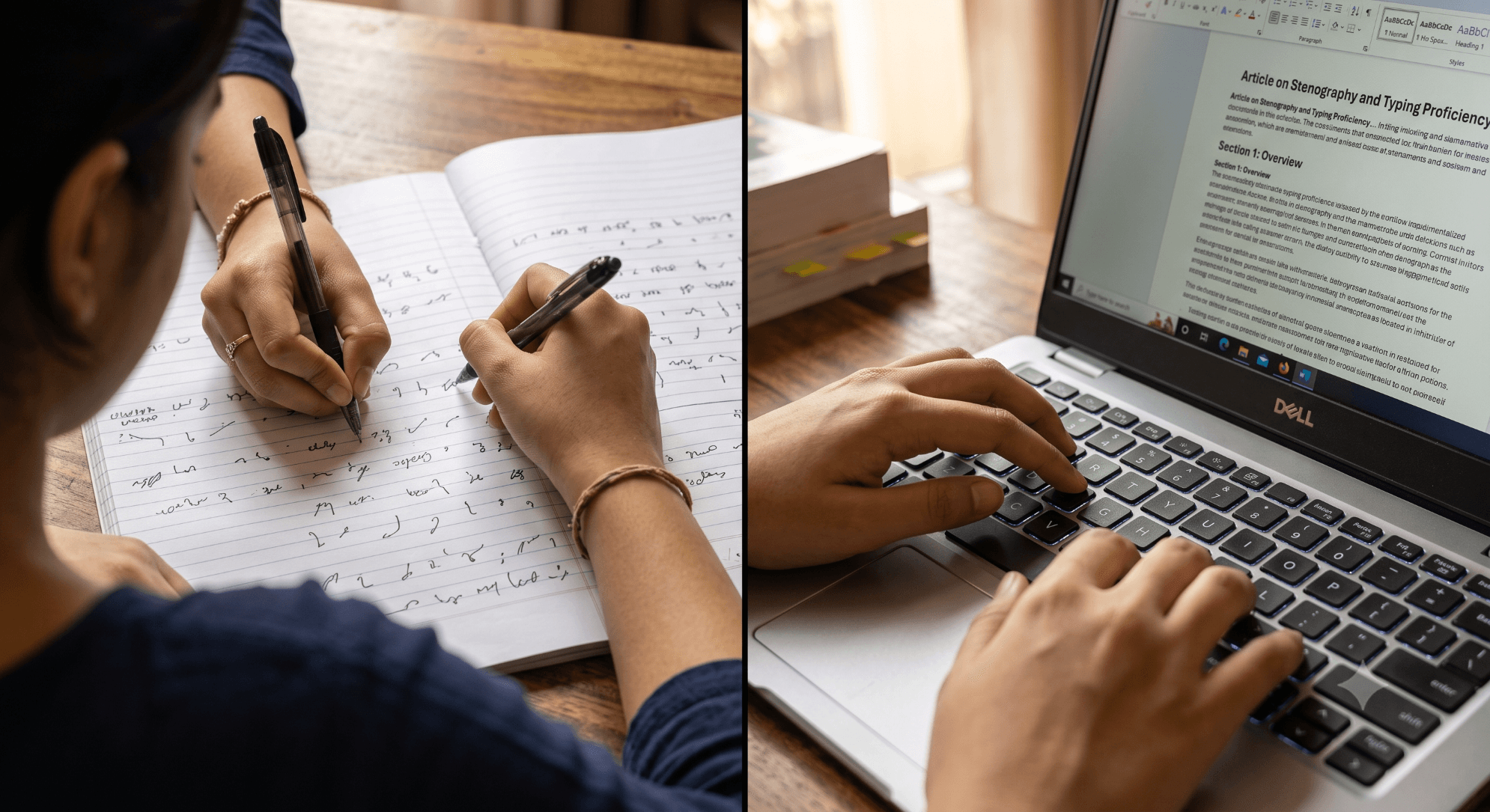
People often use "stenography" as a catch-all term, but the job actually rests on two distinct skills: taking dictation in shorthand, and transcribing that shorthand into clean, accurate typed text. Understanding the difference helps you practice each one deliberately, instead of blending them together and getting good at neither.
Shorthand: Capturing Speech in Real Time
Shorthand is a system of abbreviated symbols or strokes that let you write as fast as someone speaks—far faster than longhand writing allows. It's the "listening and capturing" half of the job. The goal during dictation isn't to write perfect prose; it's to accurately capture every word using your shorthand outlines, staying in sync with the speaker without falling behind.
Typing: Turning Shorthand into a Finished Document
Once dictation ends, the transcription phase begins: reading back your shorthand notes and typing them out as a clean, correctly formatted document—usually within a strict time limit. This is where typing speed and accuracy matter enormously. A candidate who took perfect shorthand notes but types slowly, or makes frequent errors, can still struggle to finish transcription on time.
Why Both Skills Need Separate Practice
- Shorthand practice should focus on building your outline vocabulary, writing speed, and the ability to keep up with natural speech rhythms.
- Typing practice should focus on keyboard accuracy, muscle memory, and speed—ideally practiced on the same kind of keyboard/software you'll use in the actual test.
- Combine them regularly with full dictation-to-transcription mock runs, so you get used to the mental switch between the two skills under time pressure.
The Bottom Line
Think of shorthand and typing as two separate muscles that both need training. Strengthening only one will leave a gap that shows up exactly when it matters most—during the timed skill test.